
Bayfield County Sex Offender Checks
The Wisconsin Public Sex Offender Registry is the first official channel for Bayfield County registry checks. Wisconsin Department of Corrections, not the sheriff, runs it. The tool offers a specific-offender route and a geographic route. Choose the name path when a full or partial identity is known. Use the address option when the question concerns a street or nearby area. Area notification can also alert a subscriber when a registrant moves into the chosen area.
Start with a narrow question. A name search seeks one person. An address search describes who appears within the chosen area. Neither result proves that every past sex offense will appear, because the law's effective dates, custody status, supervision history, and court orders affect registration. The registry also caps current results at 50. If a broad Bayfield County search reaches that limit, tighten the name or location rather than assuming the first set is complete.
Keep a note of the search method and date. Registry information can change when DOC receives a new address, custody event, or status update. A saved name result and an address alert serve different needs: one documents what was reviewed at a point in time, while the other can provide notice of a later move into the selected area.
Bayfield County Registry Authority
The registry belongs to the Wisconsin Department of Corrections. That distinction matters in Bayfield County. The research did not verify the Bayfield County Sheriff as a public registration office, so questions about a duty to register, an update, or an apparent error should go to DOC. General DOC contact is 608-240-5000. Registrant updates use 608-240-5830.
The DOC service page shown below helps place the public registry within the state corrections system. The image comes from the official Wisconsin DOC site.
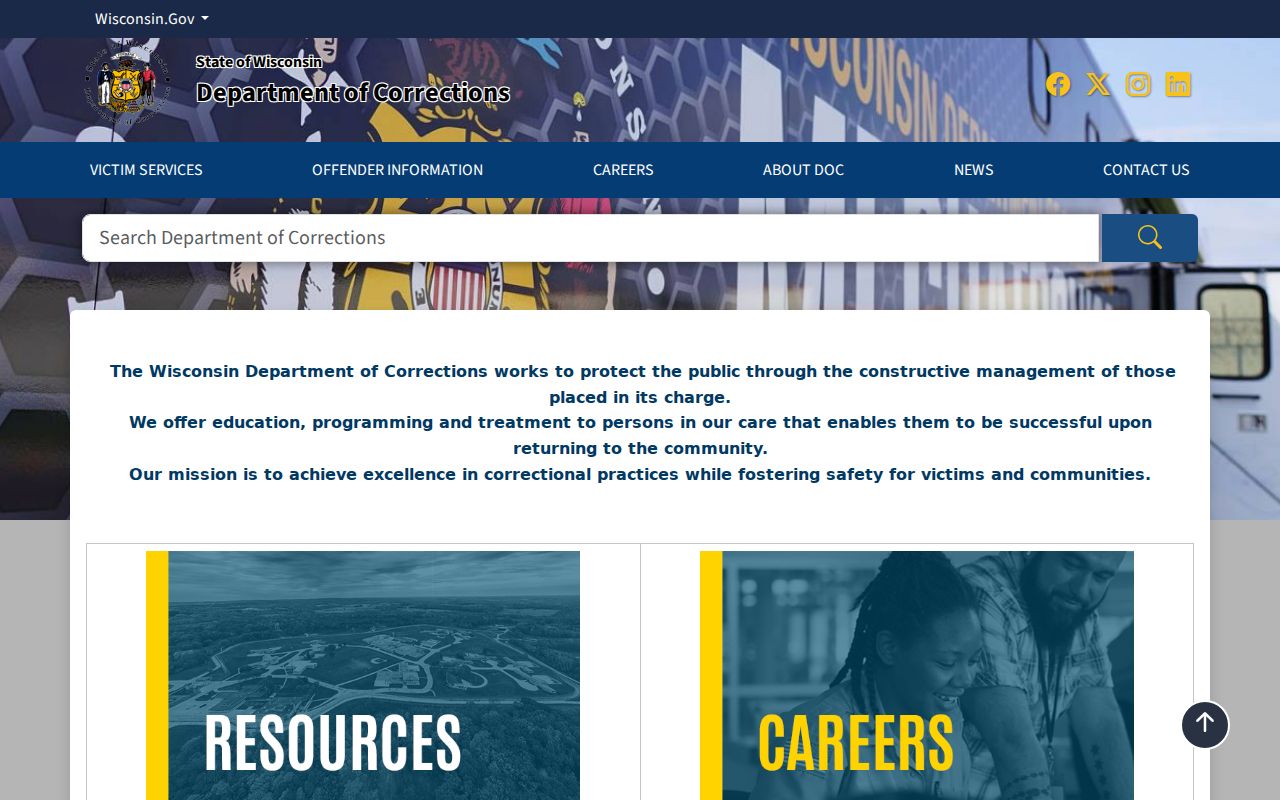
This state-level ownership explains why county court records and the registry can show different facts. A court file tracks the prosecution. The registry tracks statutory reporting and public-notice data after a qualifying event.
That split also sets the correction path. Court clerks can explain their filed case records, but they do not revise the public registry. DOC can review a registration or disclosure concern, while local police handle an immediate safety event. Sending the question to the office that controls the relevant file is faster and avoids conflicting answers.
Wisconsin Public Sex Offender Registry Searches
The portal requires acknowledgement of its terms before a user reaches the search tools. Current official materials confirm name and geographic routes, but the live interface may change. Avoid guessing at fields that are not shown. A practical Bayfield County search follows four steps:
- Open the Wisconsin registry and accept the conditions of use.
- Select the specific-offender name route or the geographic address route.
- Review the result list, watching for similar names and the 50-result cap.
- Open a profile and compare its identity, location, offense, and current status details.
The official Wisconsin registry interface is pictured here as the source for Bayfield County sex offender searches.
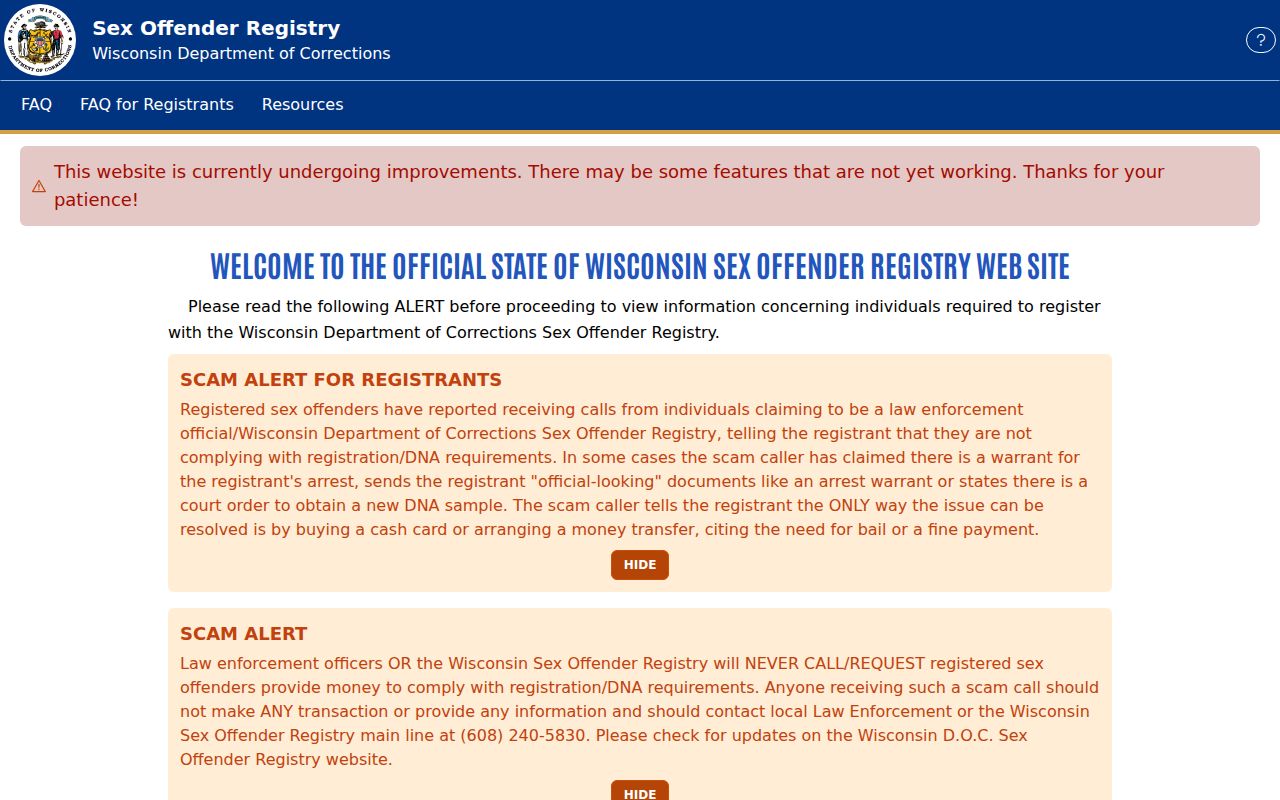
The public interface keeps the county search tied to current state data instead of a copied local list.
| Search element | Type | Required | Verified note |
|---|---|---|---|
| Specific offender or name | Text search | Not specified | Use for a known person |
| Geographic or address | Address search | Not specified | Use for proximity results; confirm the current radius |
| Area notification | Signup | No | Alerts for moves into an area |
| Results | List and profile | Not applicable | Current system limit is 50 |
Bayfield County Address Alerts
Place-based alerts are especially useful in a county with nearly 1,478 square miles of land, many rural roads, two cities, one village, tribal land, and large stretches under other public jurisdictions. An alert tied to an address can be more useful than repeatedly entering a broad county name. It focuses the notification on a place that matters to the subscriber.
Geography still needs context. A mailing address, municipal boundary, and law-enforcement jurisdiction do not always match. An event near Red Cliff, a national lakeshore site, or a state route can involve a different public agency than one inside Washburn or Bayfield. Registry location data answers the statutory notice question. It does not identify which agency holds an unrelated incident report.
Registry Profiles: What They Show
Wisconsin law permits a registration file to contain identifying traits, residence, work and school information, offense data, corrections status, vehicles, and certain internet or communication identifiers. Public disclosure is a separate decision. Not every authorized field appears on every public profile, and an absent field should not be filled by inference.
| Name and aliases | Names linked to the registration file, subject to public disclosure rules. |
|---|---|
| Physical details | Date of birth, gender, race, height, weight, hair, eyes, and other traits may be held. |
| Residential location | The discloseable location detail shown by the current public profile. |
| Offense information | Qualifying offense facts and statute information made public by DOC. |
| Corrections status | Current custody, supervision, or registration information where displayed. |
| Vehicles and identifiers | Vehicle data and specified identifiers may exist, but public display varies. |
Read those fields together. A name alone is a weak match, and a profile should not be expanded with facts from social media or a private people-search product. The safe course is to use the official record as published and contact DOC about a genuine discrepancy.
Physical traits and aliases help distinguish similar names, but they can also change. Address detail may be limited by the rules that control public disclosure. Offense and corrections fields should be read with their labels and dates. A registry profile is a statutory notification record, not a complete police narrative, sentencing transcript, or statewide rap sheet.
Bayfield County Cross-State Searches
People may live, work, travel, or move across state lines. The Dru Sjodin National Sex Offender Public Website, known as NSOPW, provides the official national layer. It searches participating jurisdiction registries rather than replacing Wisconsin DOC. Use it when the location question crosses Wisconsin's border or when a person may be registered elsewhere.
The official NSOPW search shown below demonstrates that broader reach. Its source is the national registry site.
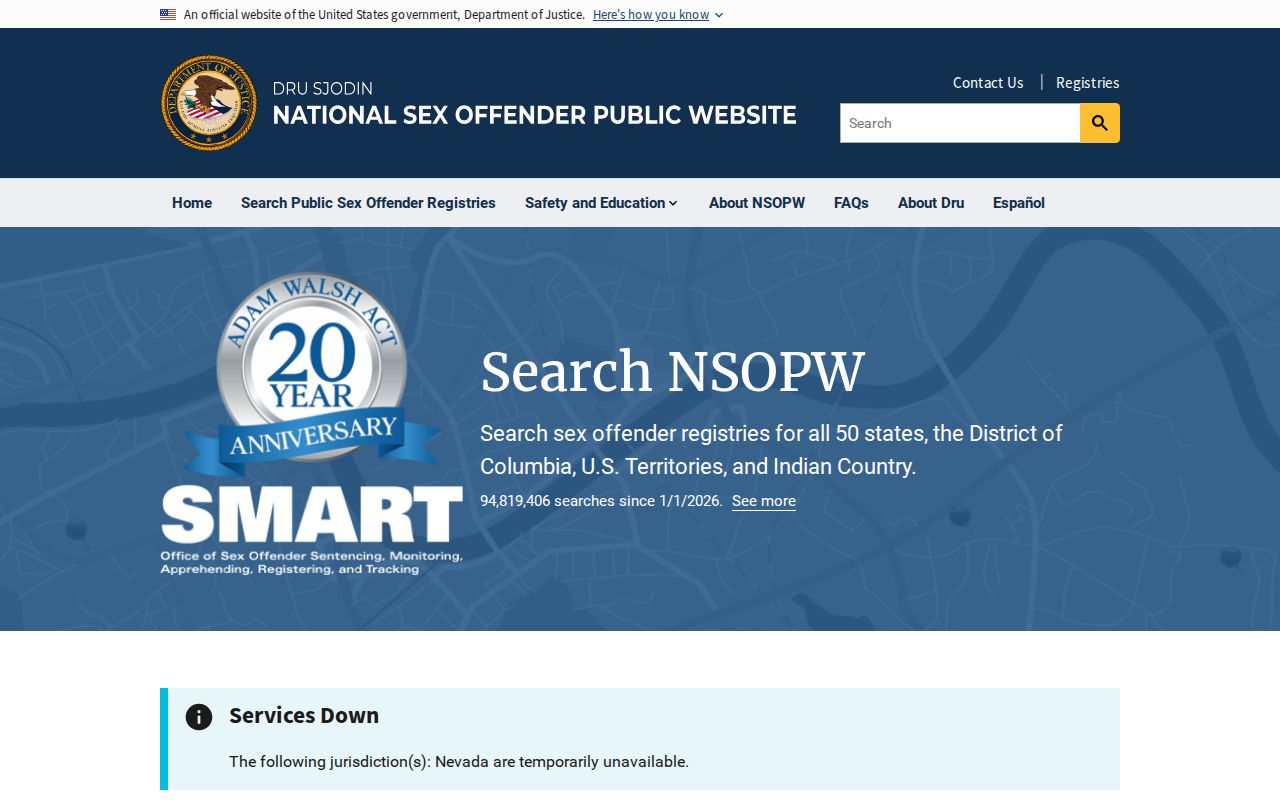
A sound search uses Wisconsin DOC for current Bayfield County detail and NSOPW for the wider jurisdiction check. Differences should prompt closer review, not an assumption that either screen tells the whole history.
Registration Levels and Duties in Wisconsin
Wisconsin does not label its public registry results with the federal Tier I, II, and III system. Its core duration rules come from Wis. Stat. § 301.45. A standard covered registrant generally registers for 15 years after the applicable discharge, release, or sentence endpoint. Enumerated serious offenses, multiple qualifying findings, sexually violent predator status, lifetime supervision, and other listed categories can require lifetime registration.
| Wisconsin category | General duration | Public notice |
|---|---|---|
| Standard covered registrant | Generally 15 years from the statutory endpoint | Controlled separately under § 301.46 |
| Serious, multiple, or other listed category | Lifetime when the facts meet § 301.45 | Controlled separately under § 301.46 |
| Special Bulletin Notification | Not a federal tier or duration label | Enhanced disclosure when release will improve public safety |
Duration and visibility are separate. Special Bulletin Notification concerns enhanced public disclosure. It is not a substitute name for a federal tier. A reader should use the category and status shown by DOC, then consult the current statute or DOC when a duration question depends on the case facts.
The applicable endpoint can depend on discharge, release, sentence, supervision, and other case facts. That is why adding 15 years to a conviction date can produce the wrong answer. Lifetime duties likewise arise from the categories written into Wisconsin law, not from the visual prominence of a public profile.
Report Bayfield County Noncompliance
Suspected failure to register or update information should be reported to DOC's Safe Tip Line at 1-877-234-0085. Give clear facts, such as the profile at issue and the observed discrepancy. Do not confront the person. DOC can compare the tip with the registration file and decide what follow-up is lawful.
Enrolled victims, survivors, and witnesses have a separate service called DOC NOTIS. It can provide custody, supervision, and registry notifications to eligible enrolled users. It is not a general public alert product. The public area-notification option and NOTIS serve different groups, so selecting the correct channel avoids delay.
Bayfield County Registry Limits
A person may have a historical sex conviction without appearing in the present public database. Wisconsin's effective-date rules, later custody or supervision, court orders, and the exact offense all matter. The registry also is not a complete criminal-history file. For filed charges and outcomes, the broader Bayfield County court case lookup provides a different official record layer.
Likewise, registry status should not be read as a forecast. The entry reports legal and identifying facts selected for disclosure. It does not rate a neighborhood, prove current misconduct, or establish that an unlisted person is safe. Use the result to support calm planning and accurate awareness.
Using Registry Information Lawfully
Wisconsin makes registry information available for public safety and community notice. Appropriate uses include checking an area, reviewing an official profile, enrolling in an available alert, and sharing the official DOC link with family members. Threats, harassment, vigilantism, and other crimes are outside that purpose.
Misuse is unlawful: Under Wis. Stat. § 973.017(3)(b), committing a crime using information disclosed under § 301.46 is an aggravating sentencing factor. Do not threaten, harass, intimidate, or target a registrant or household.
When immediate harm is suspected, contact emergency services. For an inaccurate or outdated registration detail, use DOC. That keeps Bayfield County safety decisions tied to the agency that maintains the record and avoids needless confrontation.